Innovation.
The new idea, product, or way of working your team keeps talking about but has not moved on.
FOR TEAMS
First we get clear on your areas of focus and the outcome you want from this training. Then we run a 60 minute live session where everyone on your team finds the one move they could make in each area, you align on what to act on, and you get custom cards for the next 30 days to keep it going. It is gamified behavioral change, and your people leave with moves made, not just discussed.
Before the session, we name the areas that matter for your team.
And we get clear on the outcome you want from this training, across those areas.
The new idea, product, or way of working your team keeps talking about but has not moved on.
The way you want this team to actually work together, make decisions, and hold each other to them.
The tools you already bought, and the change in daily work it will take for people to use them well.
The follow up, outreach, and bold asks that would move revenue if your team did them consistently.
The transition, reorg, or new direction everyone is waiting on, and the first moves that prove it is real.
Your areas might be three of these, or your own. Those areas set the board. Then we play.
We identify your areas of focus, and the outcome you want from the training across them.
Your team gets a short exercise before the session, so they walk in already thinking.
For each area, everyone answers: "What's the one move we could make to improve this?"
It could be improving a process, removing unnecessary meetings, or rewarding individual contributors for their innovative ideas.
Everyone shares their ideas. Then the team aligns on what to act on, one action a person, or the team, can take.
Say we choose three things. That is the scope.
After the live session, you get custom cards built from your areas and the things you chose.
For 30 days, the cards keep pushing action on them.
We track the cards as they resolve: sent, bent, or ended, and we find out why anything was not sent.
4 people x 3 areas = 12 ideas
Many moves in. Three things chosen. One first action for each. That is the narrowing.
That is how we gamify behavioral change. Clear focus, real moves in the room, and cards that keep the behavior going for 30 days.
The Situation. What's happening in your industry.
The Complication. What's already happening inside your company.
The Question. The one that forces the answer.
You drop the card. The room finds the move.
Helps the move? Send it.
Could help, with a change? Bend it.
Does not help? End it.
That filter is the shared language your team keeps after I leave.
In the session, your team plays sample cards like these. The custom deck comes after.
These are sample cards, so you can feel the format. Your team's custom cards are built after your session.
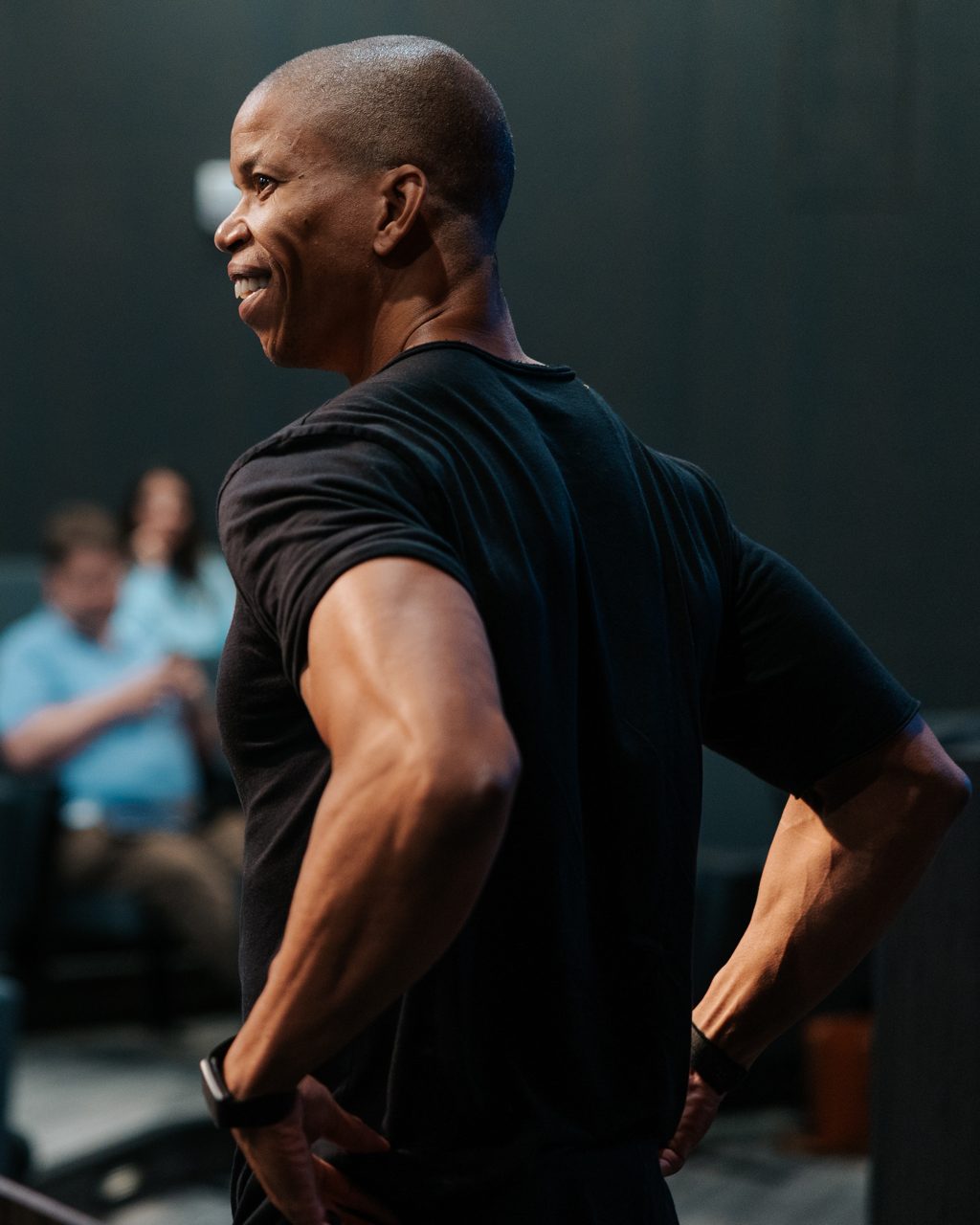
Terry plays first. Then the room plays.
"I go first. You might see me drop for 10 push-ups, or call my mom to thank her for a childhood memory. I am not preaching at anyone. We are all in this."
We put your areas of focus and the outcome you want where everyone can see them. Now the room knows what we are improving, and why.
For each area, everyone thinks, then shares: what's the one move we could make to improve this? Ideas stack up fast, one per person, per area.
The team looks at all the ideas together and aligns on what to act on. We choose the things that matter most, say three things, and name the action for each, individually or as a team. Can't do it right now? It goes on the calendar on the spot. That counts.
Your custom cards are built from this session, around your areas and your chosen things. Witnesses assigned. The 30 day game is set.
We get clear on your areas of focus and your outcome, run the 60 minute live session where your team finds its moves and aligns, and you get custom cards after to keep it going for 30 days.
For all hands and conferences. The 60 minute keynote version: the test, the cards, and the whole room identifying the one move and moving at once.
AFTER THE WORKSHOP
The workshop does not end in the room. Here is what is included.
Included with your workshop
Built after your session from your areas of focus and the things you chose. For 30 days they push action on them, and we track who is taking the challenges and why anyone is not.
At the end of the 30 days, you get a short summary: the things your team chose, the actions sent, bent, or ended, and what to do next. That is how you know it worked, and what to run next.
CUSTOM OPPORTUNITIES
The workshop is the standard way in. If your team needs a different shape, we scope it on the same call. Three options teams ask for:
Bring Send It into your quarterly planning cycle. Each quarter, we scan your areas again, choose the next things, and reset the cards, so the planning ends in moves your team actually makes.
A review session at the end of a 30 day run, or at quarter end. We go through what got sent, bent, or ended, what it produced, and name the next moves together.
A half day or full day offsite built around your areas of focus and your outcome. More time in the room, a deeper round of moves, and a plan with dates on it before you leave.
Fresh decks, ongoing cards, and 1:1 coaching for leaders are also available, scoped the same way.
Host rating 4.5/5. 90% said it was worth their time.
9 out of 10 would recommend to a colleague.
"Terry was wise, honest, vulnerable, funny and so captivating. I'm inspired to be better and challenge myself to step out of my comfort zones."
"I could listen to Terry talking for 6 hours straight."
Terry Rice is a keynote speaker and creator of the Hard or Wrong decision framework. He has designed and delivered trainings for General Assembly since 2015. His keynotes and sessions have been delivered for teams at Google, Amazon, EY, Berkshire Hathaway, Adobe, L'Oréal, Estée Lauder, Levi's, Red Bull, and Walmart. Faculty at NYU for 10+ years. Former Meta and Adobe.
After the live session. The cards are built from your areas of focus and the things your team chose in the room, so they push the exact actions your team aligned on. They run for the next 30 days.
One per person, per area. Four people working on three areas gives you 12 ideas to align on. Five people gives you 15. The room does the generating. The session does the narrowing.
Before the session, in the intake conversation. You name the areas that matter, innovation, culture, AI adoption, growth, change, or your own, and the outcome you want from the training across them. That clarity is what the live session is built on.
24 is the sweet spot for teams. 4 to 12 works well for leadership. Both can be scaled with pre-work.
Both. Onsite at your office or offsite, or fully remote. The Verizon training ran remote and scored an NPS of 79.
That is normal, and it is the point of the session. Everyone puts their moves on the table, one per person for every area, and then the team aligns together on the things you will act on, say three things. Your idea does not have to win for you to own an action in the plan.
Fully custom, and built after your session. The cards are written from your areas of focus and the things your team chose in the room, so no generic deck and nothing made up in advance about your team.
The keynote moves a room. The workshop moves your team: smaller, interactive, custom cards, and everyone takes a real action before it ends.
Your custom cards run for 30 days, built from your session. At the end, you get your day 30 summary: what your team chose, what got sent, bent, or ended, and what to do next. If you want to keep going, the custom opportunities below cover quarterly planning, reviews, offsites, and more.
Sales leaders with stalled pipelines, L&D teams that want training people act on, People and Culture leaders working on how a team works together, founders whose team sits on decisions.
One conversation. We talk through your areas of focus, your team size, and the right format, and scope the session together.
After the call, you get a short summary you can forward: your areas, the scope, and the quote. Take it to whoever signs off.
The three questions and the card are free. The keynote and the call are how I make a living.