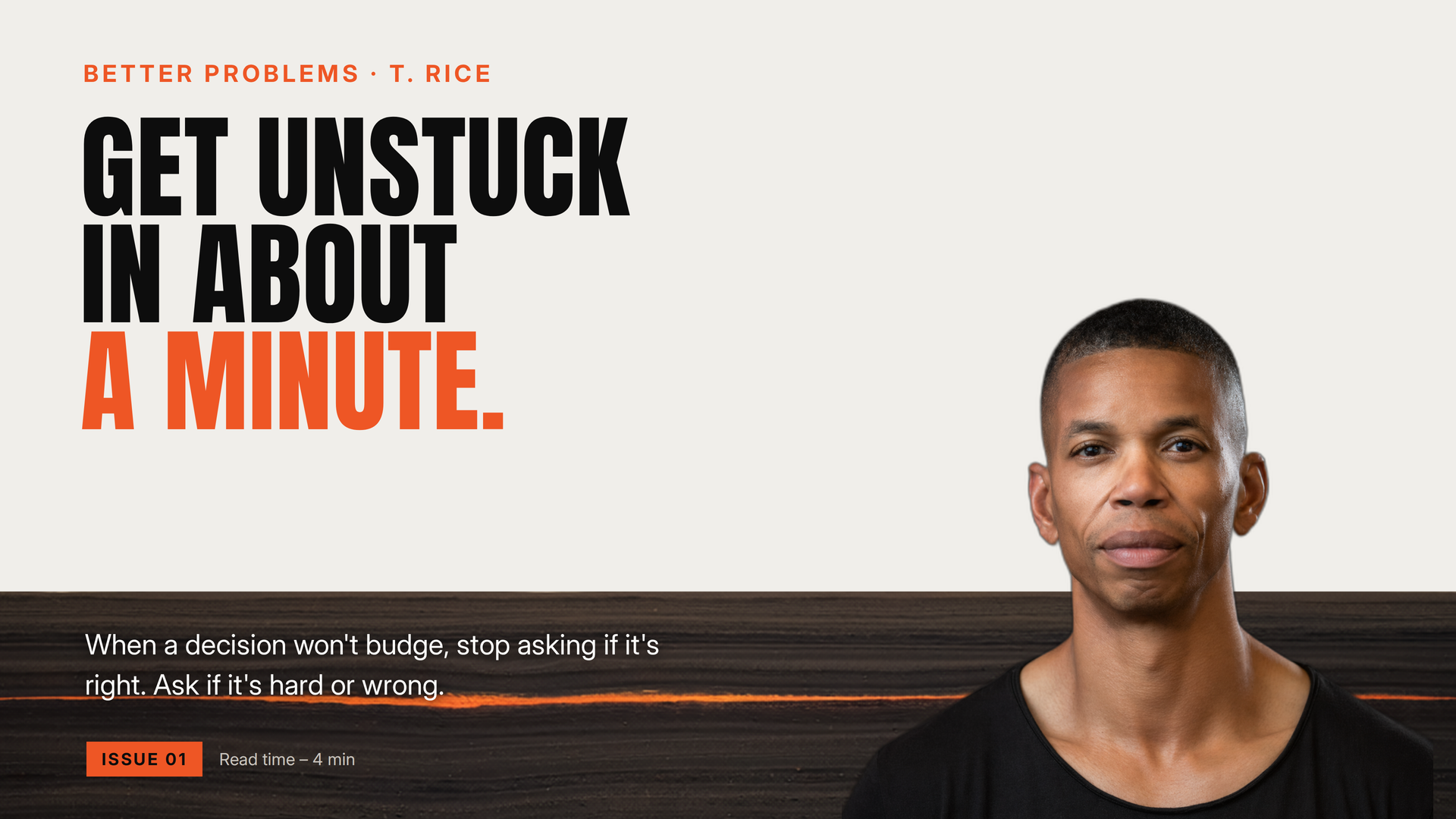
Is it hard, or is it wrong?
This newsletter runs on one test. Get the free workbook →Most times I'm stuck on a decision, I'm unstuck inside a minute. Not because I'm decisive. Because I stopped asking the question that keeps everyone frozen and started asking a better one.
A while back I stood in my kitchen after a silly argument with my wife, absolutely certain of one thing. I was not going to apologize.
Not because I had a case. I'd already lost the case. I just didn't want to. Every cell in my body was against it. My pride had built a little fort and I was comfortable in there.
You know the feeling. The apology sits right there in your mouth and weighs four hundred pounds.
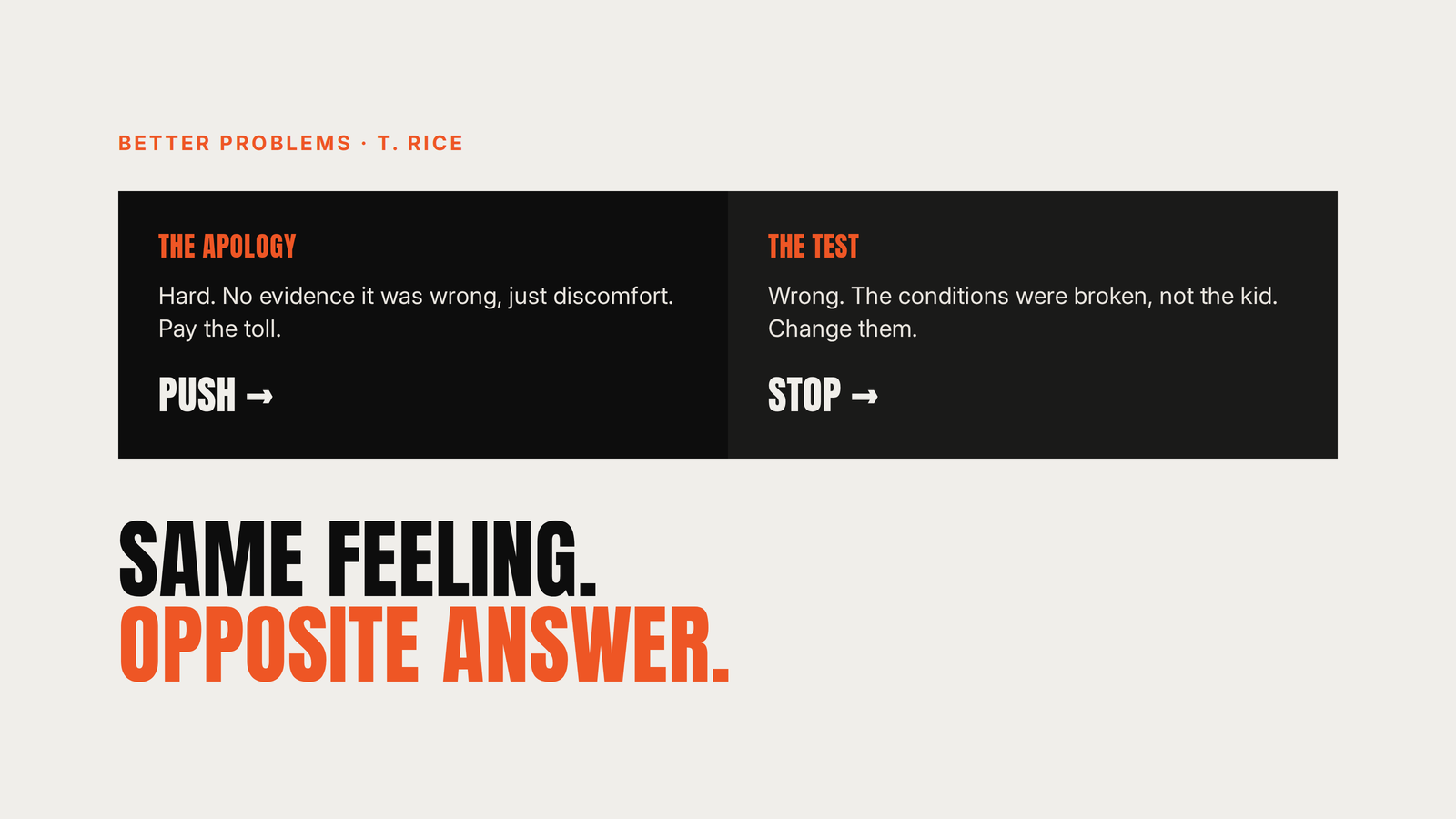
Here's what got me out of the fort. I stopped asking whether I wanted to apologize and named what I actually wanted. Not to win Tuesday. A marriage that works. And once the goal had a name, the resistance I was feeling changed shape. It wasn't a warning. It was just a toll. The apology was hard, and hard was the whole cost. So I paid it. Ninety seconds of discomfort. We were fine by dinner.
Same feeling, different answer
That's one kind of resistance. Here's the other.
My son has ADHD. Early on, before his accommodations were in place, he was headed into a test without them. And the world has a ready-made script for that moment. Push through. Everyone finds tests hard. Builds character.
From the outside, his resistance looked exactly like mine in the kitchen. Something feels bad, and you don't want to do it.
But it wasn't the same thing at all. Asking him to take that test without the right support wasn't hard. It was wrong. The conditions were broken, not the kid. And the move wasn't push. It was stop, and change the conditions until the test measured what he knows instead of what he can endure.